This research tour was a trip around three European countries aimed at building a network for research on the body, action, and subjective self-awareness. The journey encompassed a European Community conference on body representation held in Spain, a visit to Sony CSL Paris in France, a stop at INRIA in Rennes, France, where extensive research on Virtual Reality is conducted, and a trip to the Donders Institute for Brain, Cognition and Behaviour in Nijmegen, Netherlands, to engage in discussions, presentations, and talks revolving around research trends and discussions in the European community concerning body representation. In general, the trip reinforced my initial recognition of a vibrant trend in research related to the body, actions, and subjectivity within the European area. It was clear that various institutes and universities within Europe have active communities where there is a frequent exchange of resources and opinions, fostering and accelerating research concerning the body and subjectivity.
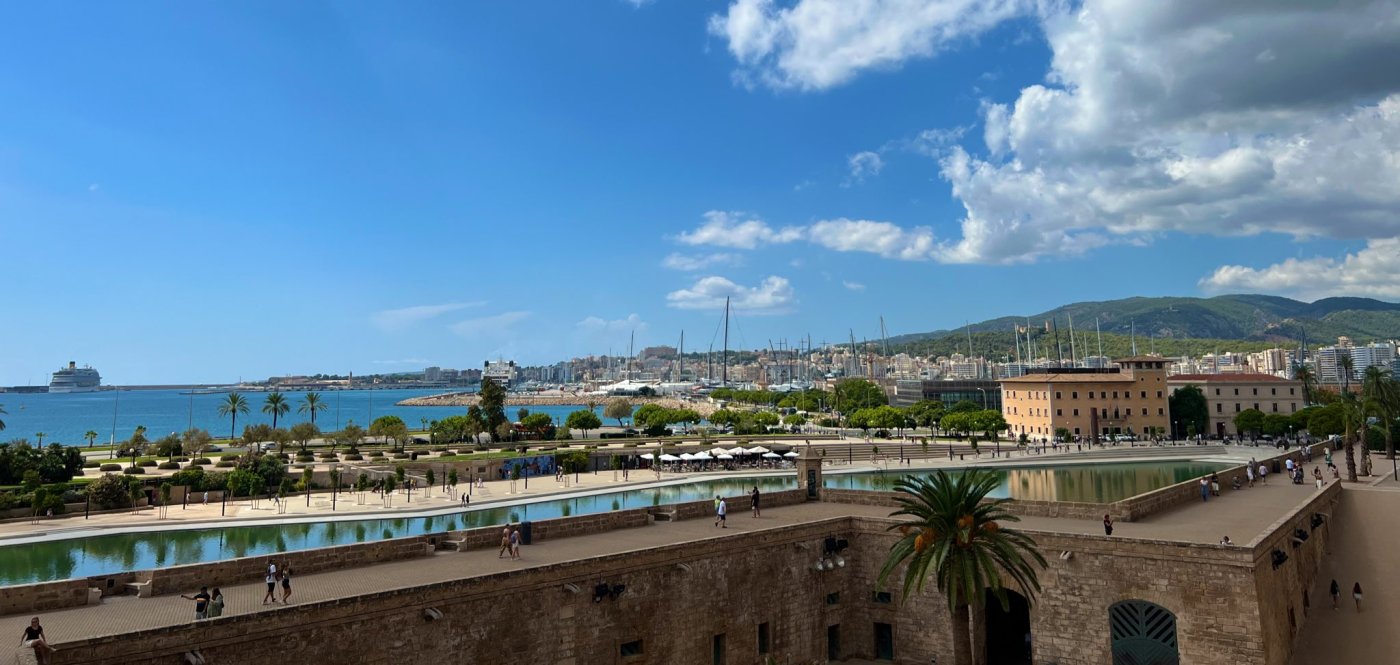
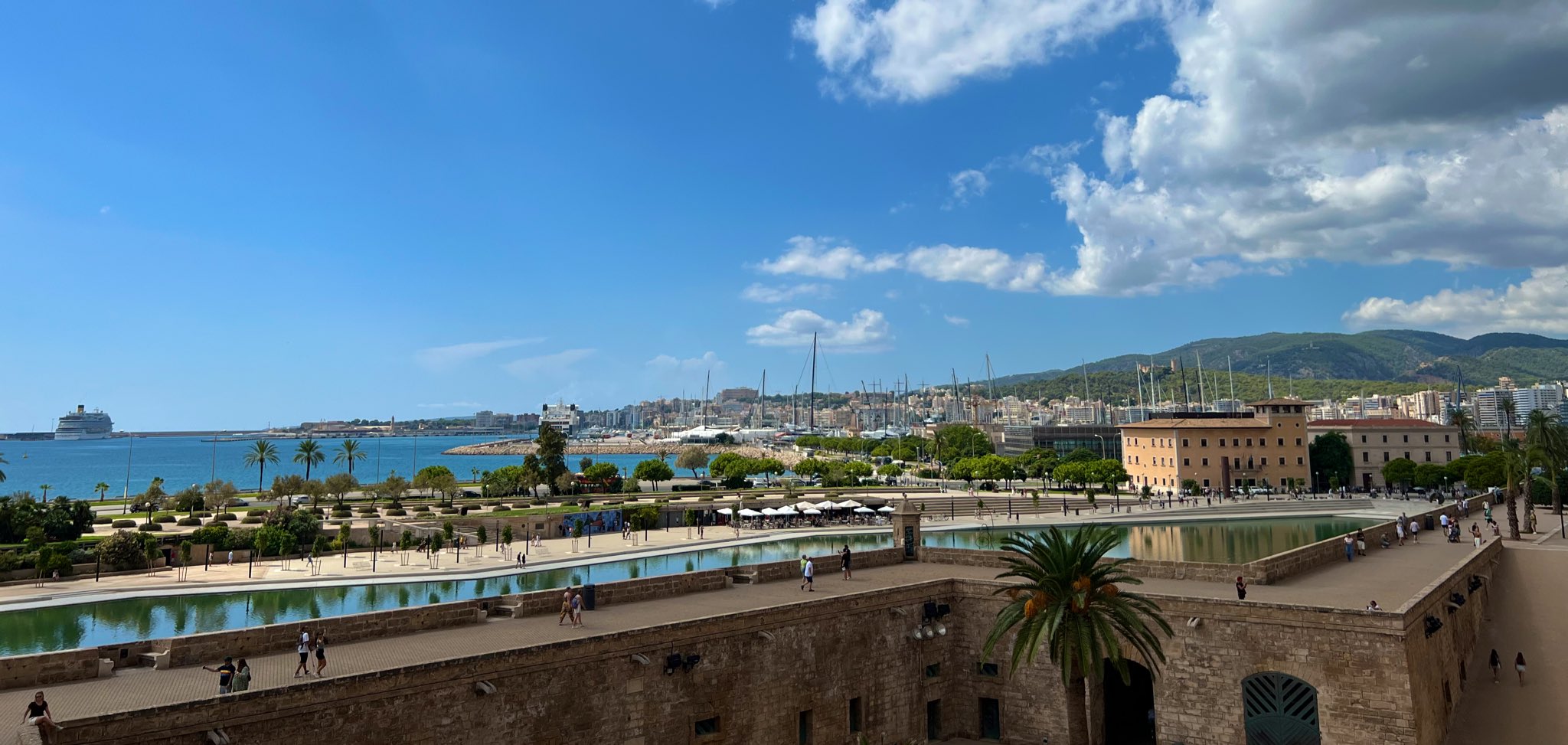
Firstly, the tour started with participation in the BRNet5 (Body Representation Network Conference [1]) held on the island of Mallorca, Spain. The conference started with a panel discussion on career formation in the European region directed towards relatively young researchers, including doctoral students and postdocs. The prioritization of this session underscored the conference’s focus on networking and career development for researchers. Subsequent sessions included one related to Prof. Francesca Frassinetti, where Dr. Mariano D’Angelo from the Karolinska Institute presented research involving various body representations to study the influence of body representation on a sense of agency and ownership, proximity space, and body schema [2]. Prof. Francesca Garbarini (Univ. degli Studi di Torino) introduced a series of studies related to bodily illusions and their connection to brain neural damage [3]. Additionally, Dr. Valentina Cazzato (Liverpool John Moores Univ) presented her research on conscious body representation, discussing discrepancies in body schema, and diseases attributed to age and body image variations [4].
The second day of the conference featured keynote talks, oral presentations, and poster sessions. Prof. Roy Salomon delivered a keynote speech, presenting a series of experiments investigating the two-step hypothesis of multisensory integration and the Sense of Agency using a virtual hand, focusing on its temporal properties[4]. Subsequent oral presentations were numerous and rich, making it challenging to report all. Notably, Dominika Radziun (Karolinska Inst.) introduced a study utilizing the somatic rubber hand illusion to investigate how visually impaired individuals perceive their bodies, focusing on the integration of tactile and proprioceptive signals from both hands[5].
I collaborated in a poster presentation with Prof. Wen Wen from Rikkyo University. Our presentation focused on the results of experiments that utilized a system developed by myself, involving the synthesis of facial movements and visual identity, to explore whether the subjective sense of control could be modulated by presupposed visual identities. Details will be elaborated upon in a future paper submission, but our work was very well-received within the BRNet community, sparking vibrant discussions. It also facilitated meaningful exchanges with researchers sharing similar interests.
During the conference dinners, there were opportunities to gain insights into the reasons behind the vibrancy of body representation research within the European domain and its cultural backgrounds. In some respects, I sensed differences unique to a culture that experiences the flow of time differently from the United States. Dinner discussions even looked into topics like choosing the best brushes for the rubber hand illusion experiments, highlighting shared interests within the community. Overall, the participants at BRNet included those from various European universities and institutes such as UK’s UCL, Italy’s IIT, Sweden’s Karolinska Institutet, and the Netherlands’ Donders Institute. We were the sole representative from the Asian region, making the conference an incredibly valuable opportunity to expand our network.
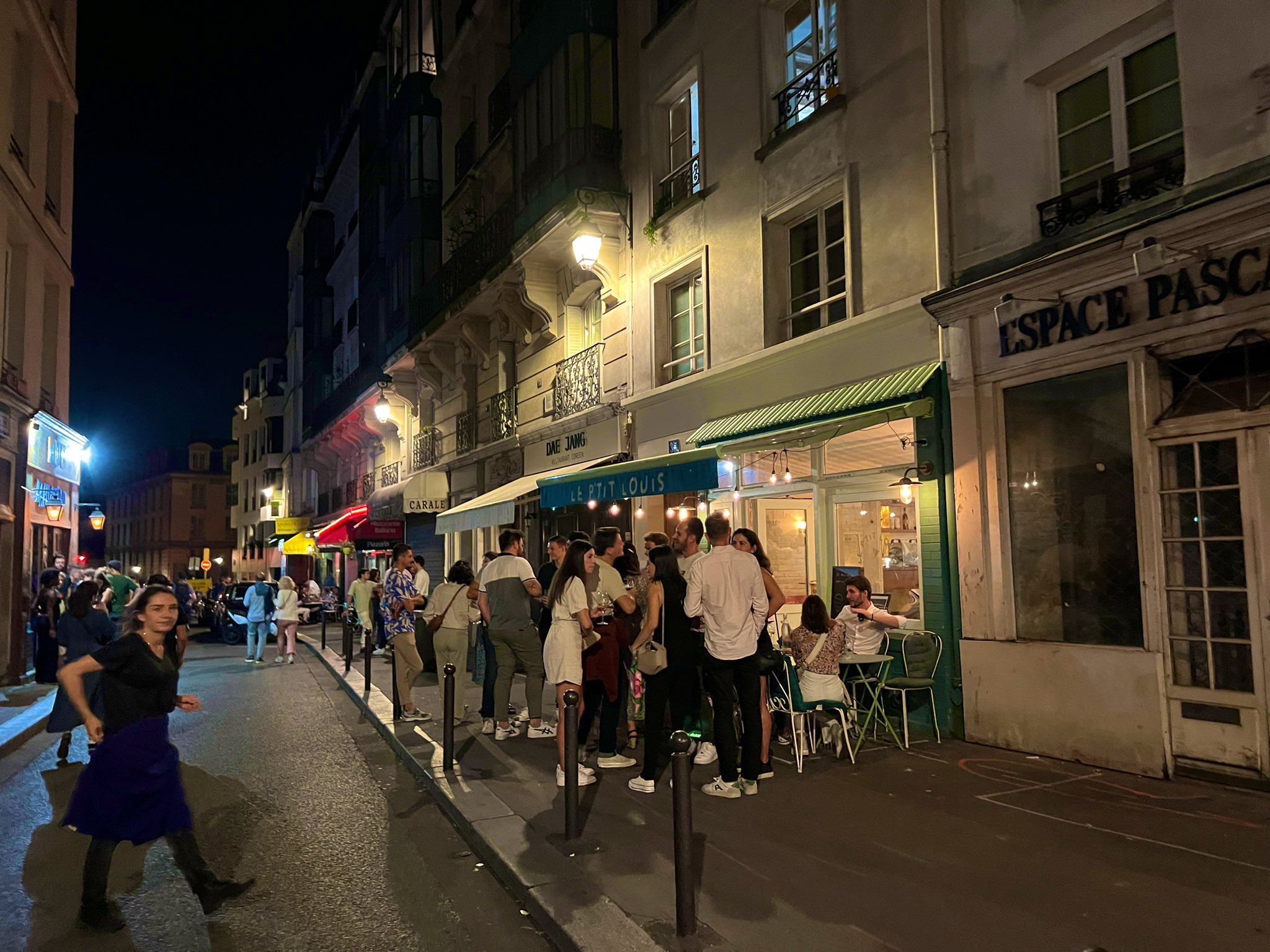
After Spain, I visited Paris, France, where I met with Dr Alexis André, who recently moved to Sony CSL Paris. After sharing updates and visiting CSL Paris, I traveled to Rennes to visit Dr. Anatole Lécuyer at Inria (Institut National de Recherche en Informatique et en Automatique). I had previously had extensive discussions with Anatole during his short-term stay at OIST, where we also conducted seminars and public lectures together.
This visit included learning the Virtual Reality (VR) experimental environments at Inria and engaging in discussions and talks. Particularly noteworthy is that Inria has four teams conducting VR-related research, involving over a hundred researchers in total. Anatole leads one of these teams, focusing on a multitude of studies combining VR engineering with body cognition, such as body transformation in virtual bodies and Pseudo Haptics[6]. I experienced and discussed several of the latest projects from Anatole’s team.
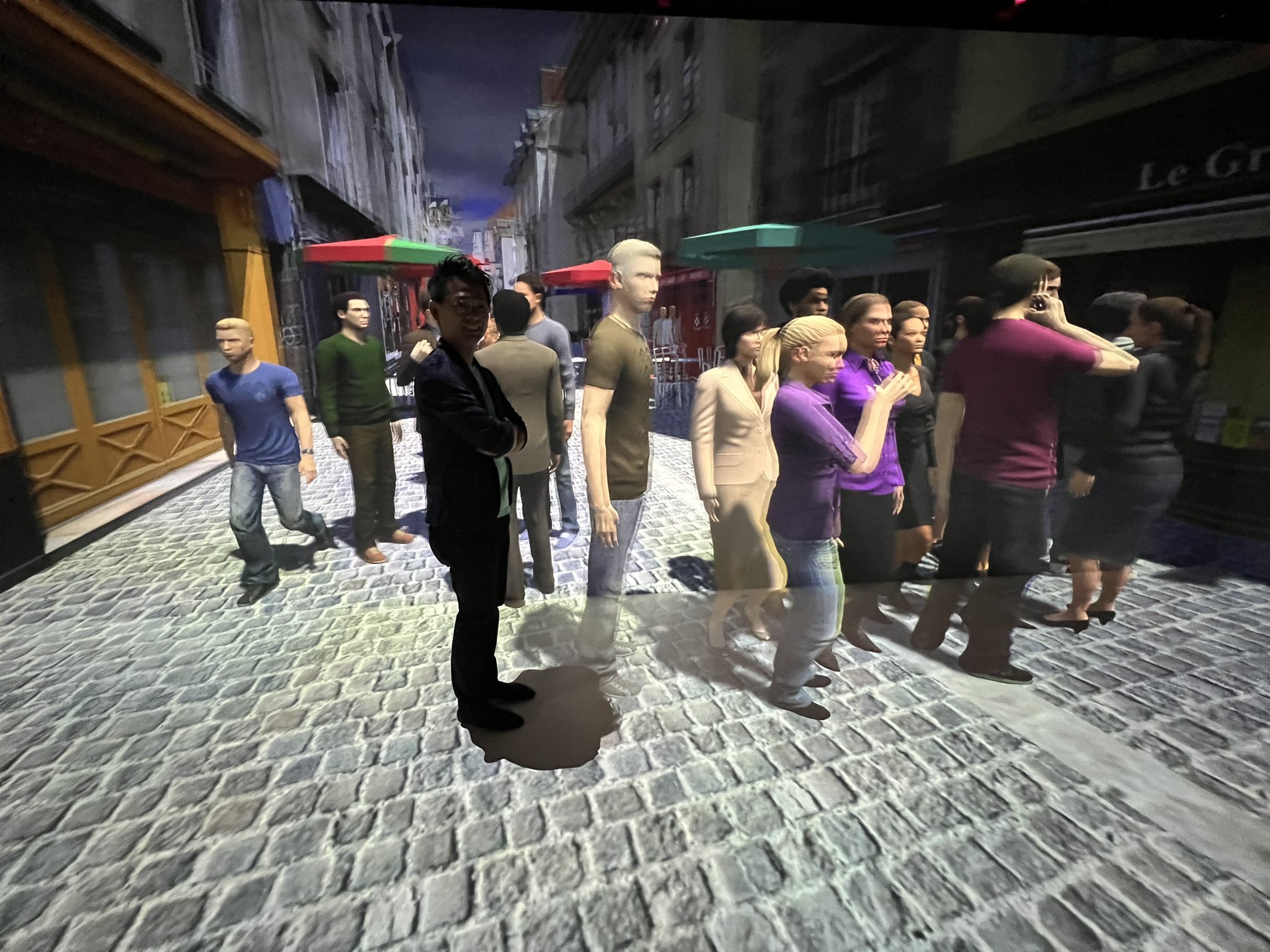
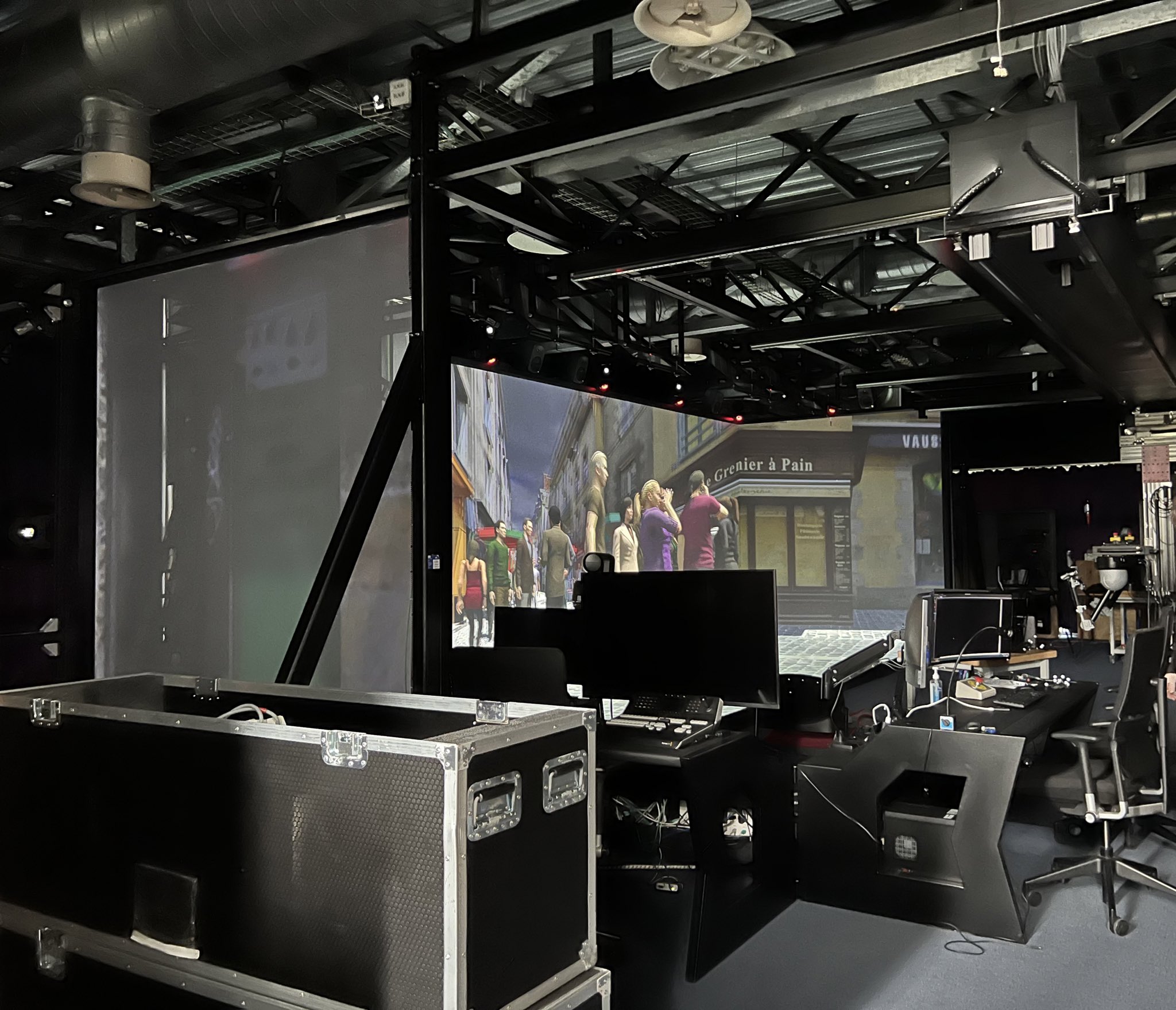
Furthermore, Anatole gave me a tour of “Immersia,” a shared VR system within Inria[7]. Immersia is a large-scale Cave system, approximately 9.6 meters wide, providing immersive stereoscopic imagery through liquid crystal shutter glasses. The projector system uses rear projection, ensuring image consistency across a wide range of movements. Multiple projectors are synchronized, securing frame synchronization. The system also accommodates a large counterbalanced Force Feedback device, offering a high-fidelity VR experience not achievable with Head-Mounted Displays (HMDs). During my experience in the system, I particularly engaged in a collision avoidance task with virtual pedestrians, finding the presence of the virtual avatars quite realistic and palpably oppressive as they approached for a collision. The provision of visual images extending to the peripheral vision and the unobstructed view of one’s body significantly differentiated the experience from that in HMDs. Subsequently, I give a talk and exchanged opinions with Inria researchers, discovering various potential combinations of ongoing research with VR studies conducted at Inria. I look forward to exciting collaborations stemming from these discussions in the future.
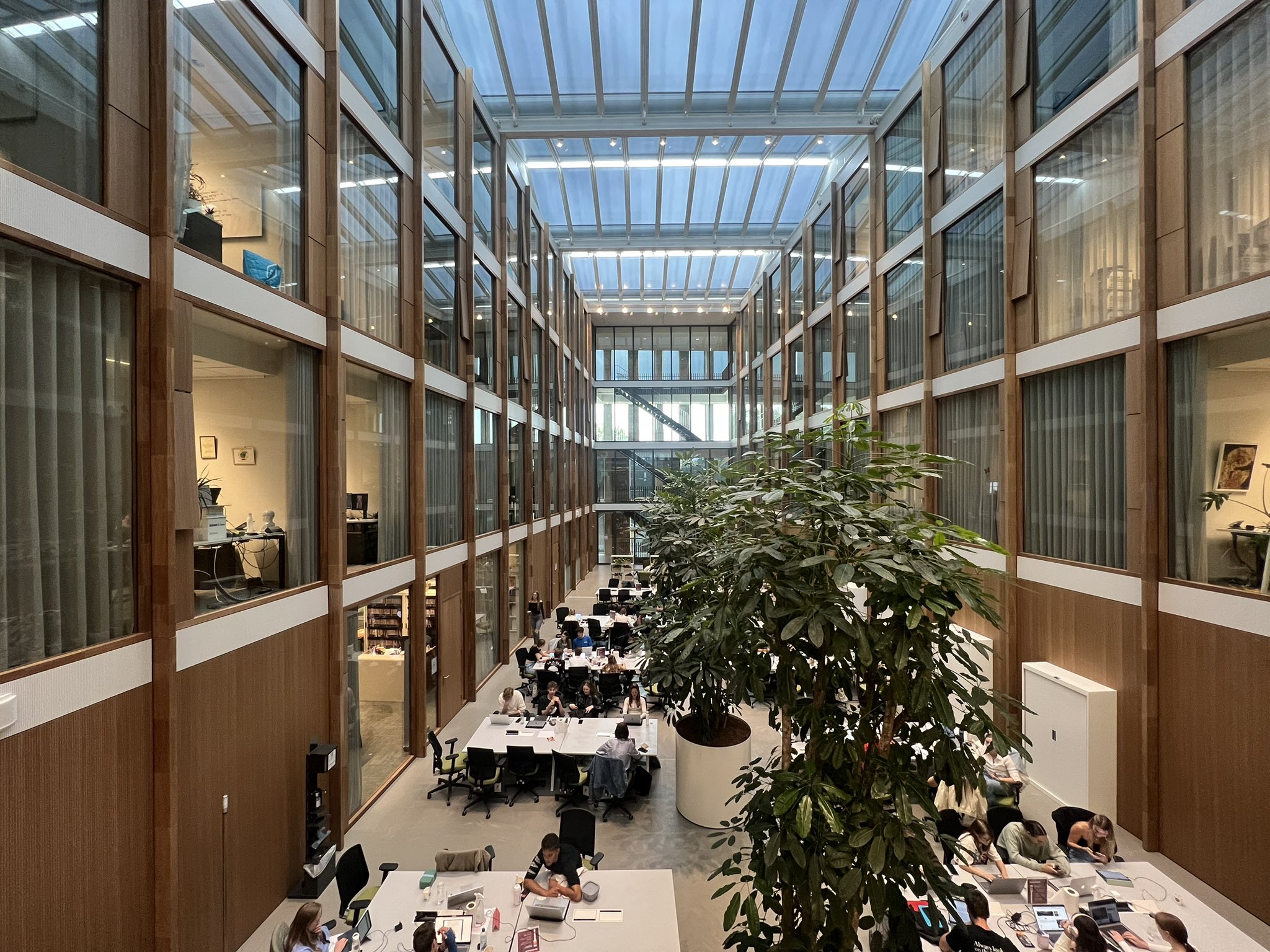
My final destination was the Netherlands. After flying in, I traveled by train to Nijmegen to visit the Donders Institute for Brain, Cognition, and Behaviour, part of the Donders Cognitive Research Center [8]. The Center is based in Nijmegen, Netherlands, and consists of four institutes, with this particular visit focusing on the institute that hosts researchers specializing in neuroscience, language, cognitive psychology, sensory motor functions, and AI. The Donders Cognitive Research Center is located in a new building within Radboud University Nijmegen, sharing a profound connection with the university’s Social Sciences department, which presents a fascinating geographical link between the university and the research center. In particular, I visited Dr. Konstantina Kilteni, who conducts research on the sense of embodiment, active and passive motion, and somatosensation. I had previously met Konstantina at a Cinet symposium, where we discussed research systems that I currently work on, and shared ideas on several joint research projects. This visit allowed us to discuss the possibilities of joint research, engaging in detailed discussions incorporating specific devices, and we were able to formulate concrete plans for the future.
In conclusion, despite being a personally challenging research tour, involving travel across four cities three countries in a short period, it was exceptionally meaningful from the perspective of building a research network, which was the initial objective. Although the situation with COVID-19 is still critical, having the opportunity to meet face-to-face and engage in discussions with demonstrations is incredibly valuable, especially after experiencing the pandemic. It has highlighted the importance of seizing the moment and taking action when it’s possible.
[1] BRNet 5 https://bodyrepresentation.wixsite.com/brnet/2023conference
[2] D’Angelo, Mariano, Giuseppe di Pellegrino, Stefano Seriani, Paolo Gallina, and Francesca Frassinetti. 2018. “The Sense of Agency Shapes Body Schema and Peripersonal Space.” Scientific Reports 8 (1): 13847., D’Angelo, Mariano, Giuseppe di Pellegrino, and Francesca Frassinetti. 2017. “Invisible Body Illusion Modulates Interpersonal Space.” Scientific Reports 7 (1): 1302.
[3] Garbarini, Francesca, Luca Fornia, Carlotta Fossataro, Lorenzo Pia, Patrizia Gindri, and Anna Berti. 2014. “Embodiment of Others’ Hands Elicits Arousal Responses Similar to One’s Own Hands.” Current Biology: CB 24 (16): R738–39.
[4] Krugwasser, Amit Regev, Eiran V. Harel, and Roy Salomon. 2019. “The Boundaries of the Self: The Sense of Agency across Different Sensorimotor Aspects.” Journal of Vision 19 (4): 14.
[5] “Body Perception and Brain Plasticity in Blind and Sighted Individuals.” 2023.
[6] INRIA hybrid team (https://team.inria.fr/hybrid/)
[7] INRIA immersia (https://www.irisa.fr/immersia/)
[8] Donders Institute for Brain, Cognition and Behaviour ( https://www.ru.nl/donders/ )
この研究ツアーは身体とアクション、そして自己主観性に関する研究のネットワークを構築することを目的としたヨーロッパ3カ国を巡る出張であった。スペインで行われた身体表現に関するヨーロッパコミュニティのカンファレンス、フランスパリにあるSony CSL Paris、フランスレンヌにあるVirtual Realityの研究が盛んに行われているINRIA、そしてオランダ・ネイヘーメンにある身体認知に関する研究所、Donders 認知研究センターを周り、研究発表やトーク、研究のディスカッションやヨーロッパコミュニティにおける研究の潮流を議論を行った。
当初から感じていた身体や行為・主観性に関する多くの研究がヨーロッパ圏で活発であるという潮流を、確信した。ヨーロッパ圏内にある様々な研究所や大学が、相互に人材の流通や意見交換が活発するコミュニティが存在し、それらが、身体や主観性に関する研究を加速していることを理解した。
まず、最初の目的地である、スペイン、マヨルカ島で行われた、BRNet5(Body Representation Network Conference)[1]に参加。一日目のセッションの初頭でまず博士学生やポスドクなどの比較的若いキャリアの研究者に対するヨーロッパ圏におけるキャリア形成のパネルディスカッションが行われた。これが最初のセッションであることからも、このカンファレンスも目的が研究者のネットワークとキャリア形成であることがわかる。次に、Prof. Francesca Frassinettiに関連するセッションが行われ、Karolinska Instituteから、Mariano D’Angeloによる身体表現の主体感と所有感が、身体近傍空間と身体スキーマに与える影響を様々な身体表現を用いた研究について[2]、Prof. Francesca Garbarini (Univ. degli Studi di Torino) による身体に関するイリュージョンと、脳神経損傷との関連の一連の研究の紹介[3]、Valentina Cazzato(Liverpool John Moores Univ)による意識的な身体表現と、身体スキーマの違いの乖離と年齢や身体イメージに起因する疾患に関する研究の発表が行われた。
2日目はキーノートトーク、口頭発表とポスター発表が行われた。キーノートトークを行った、Roy Salomonは、多感覚統合と行為主体感(the Sense of Agency)の二段階仮説や、経時的な性質をvirtual handを用いて調査した一連の実験に関して発表を行った[4]。その後、口頭発表では、全てを報告するのは難しいが、Dominika Radziun (Karolinska Inst.)による視覚障害者がどのように自分の身体を認識しているかに関して、somatic rubber hand illusion(両手からの触覚と固有知覚の相関信号の統合によって引き起こされる身体錯視)を用いて検証する研究が紹介された[5]。
私は、現在共同研究を行っている立教大学のWen Wen氏との研究に関して共同でポスター発表を行った。我々が感じる運動の主体感が視覚的なアイデンティという前提知識によって変容しうるのかという問を、笠原が開発している2つの顔の運動と視覚的アイデンティの合成システムを用いて実験を行った結果に関して発表を行った。詳細は今後論文投稿の際に改めて説明をするが、BRNetコミュニティにおいても非常に受け入れられかつ、盛んな議論が行われた。また、近しい興味を持った研究者たちと意見交換を行えた。
カンファレンス中のディナーでも、ヨーロッパ圏における身体性研究の活発さの所以やその文化的背景などを聞く事ができ、ある意味でUSとは異なる時間の流れ方をする文化ならではの違いを感じた。また、ディナーの中で、Rubber hand illusionに用いる筆はどれがいいかという話題で盛り上がるなど、コミュニティ内の共通興味を強く感じる面白いひとときであった。総じて、BRNetの参加者はUK UCLや、イタリアのIIT、スエーデンのKarolinska Institutet、オランダのDonders Instituteなどを含むヨーロッパ周辺の大学や研究所でなどであった。アジア圏からの参加者は我々のみであったが、ネットワークを広げるという観点で大変に有意義なカンファレンス参加であった。
スペインの後、フランス・パリにおいて、最近SonyCSL Parisに移動をしたアレクシーと会い、近況報告やCSL Parisの訪問を行った後に、フランス・レンヌへ移動して、Inria(Institut National de Recherche en Informatique et en Automatique) のAnatole Lécuyer博士を訪問した。Anatole氏とは、彼がOISTの短期滞在プログラムの際でOISTに滞在している際に、多くのディスカッションを行い、かつ共同でセミナーとPublic Lectureを行った経緯がある。今回は、IriaにあるVirtual Realityの実験環境の視察とラボの訪問、トークなど行った。特に、Inriaでは、Virtual Realityに関する研究を行うチームが4つあり、合計100名を超える研究者が活動をしている。Anatole氏はそのうちの一つをチームを率いており、仮想身体での身体変容や、Pseudo HapticsなどのVR工学と身体認知を組み合わせた研究を多数行っている[6]。Anatole氏チームの最新プロジェクトのうちいくつかのデモを体験し議論を行った。
さらに、Inria内にある共通のVirtual Realityシステム immersiaを見学した[7]。横幅が約9,6m程度ある大型のCaveシステムであり、液晶シャッター方式のグラスを装着することで立体映像を高い没入感で体験することができる。プロジェクター方式はリアプロジェクションで広範囲に動いても映像の不整合は発生せず、かつ複数のプロジェクターは映像同期システムで、フレーム同期が確保されている。さらに、大型のカウンター方式Force Feedback装置をCaveシステムの中に収める事ができ、HMDでは行う事ができないVirtual Realityとしては非常に完成度の高いシステムであった。私はその中でも、特に仮想通行人との衝突回避の体験を行い、CAVEシステムの中で見る、仮想アバターの存在感が非常にリアルで、実際に目の前に衝突してくる際の圧迫感をリアリズムを持って感じる事ができた。私はその中でも、特に仮想通行人との衝突回避の体験を行い、CAVEシステムの中で見る、仮想アバターの存在感が非常にリアルで、実際に目の前に衝突してくる際の圧迫感をリアリズムを持って感じる事ができた。特にHMDと異なり、周辺視野までに視覚映像が提供され、かつ自分の身体は一切遮蔽されていないことで、主観的にHMDでの体験とは異なると感じた。その後、Iriaの研究者に向けたトークを行い意見交換を行った。特に、現在行っている研究と、Iriaで行われているVirtual Reality研究のコンビネーションに関して多くの可能性を発見した。今後、この議論から興味深いコラボレーションが生まれることを楽しみにしている。
最後の目的地として、オランダに飛行機で移動したのちに、電車でネイヘーメンへ移動、Donders認知研究センターに訪問をした。Donders研究所はオランダにネイヘーメン(Nijmegen)を拠点として4つあり、その中でも今回は、Neuro science, Language, Cognitive psychology, Sensory motor, AIに関する研究者が在籍している、Donders Institute for Brain, Cognition and Behaviourに訪問した。Donders認知研究センターはRadboud University Nijmegenの新設ビル内に存在しており、Radboud大学のSocial Scienceとの深いつながりがある。大学と研究センターの地理的な結びつきとしては大変興味深い。特に今回は、Sense of Enbodimentに関する論文や、能動運動と受動運動と感覚に関する研究を行っているKonstantina博士を訪問した。Konstantina氏とは、以前Cinetのシンポジウムで会い、その際に現在笠原がすすめている研究システムに関して議論を行いいくつかの共同研究のアイデアに関して話をしていた。今回はその共同研究の可能性に関して、具体的な装置を交えたディスカッションを行い、今後の具体的な計画まで策定することが出来た。
総じて、今回も4都市3カ国を短期間に移動する、個人的にはハードな研究ツアーであったが、当初の目的であった、研究的ネットワークを構築するという観点では、非常に有意義であった。以前、コロナの状況は余談は許さない状況ではあるが、こうしてface to faceで会い、デモも交えて議論をすることができるのは、コロナ禍を経験した後だからこと、「できるときにする」ことの重要性を感じた。






 Cybernetic Humanity