Conversational Agents on Your Behalf: Opportunities and Challenges of Shared Autonomy in Voice Communication for Multitasking
Yi Fei Cheng, Hirokazu Shirado, and Shunichi Kasahara
ACM CHI 2025 · Best Paper Award
The collaboration project with the leading author, a Sony CSL Summer Intern, Yi Fei Cheng (Carnegie Mellon University), and Hirokazu Shirado (Carnegie Mellon University)
Paper (ACM Digital Library) · PDF
Abstract
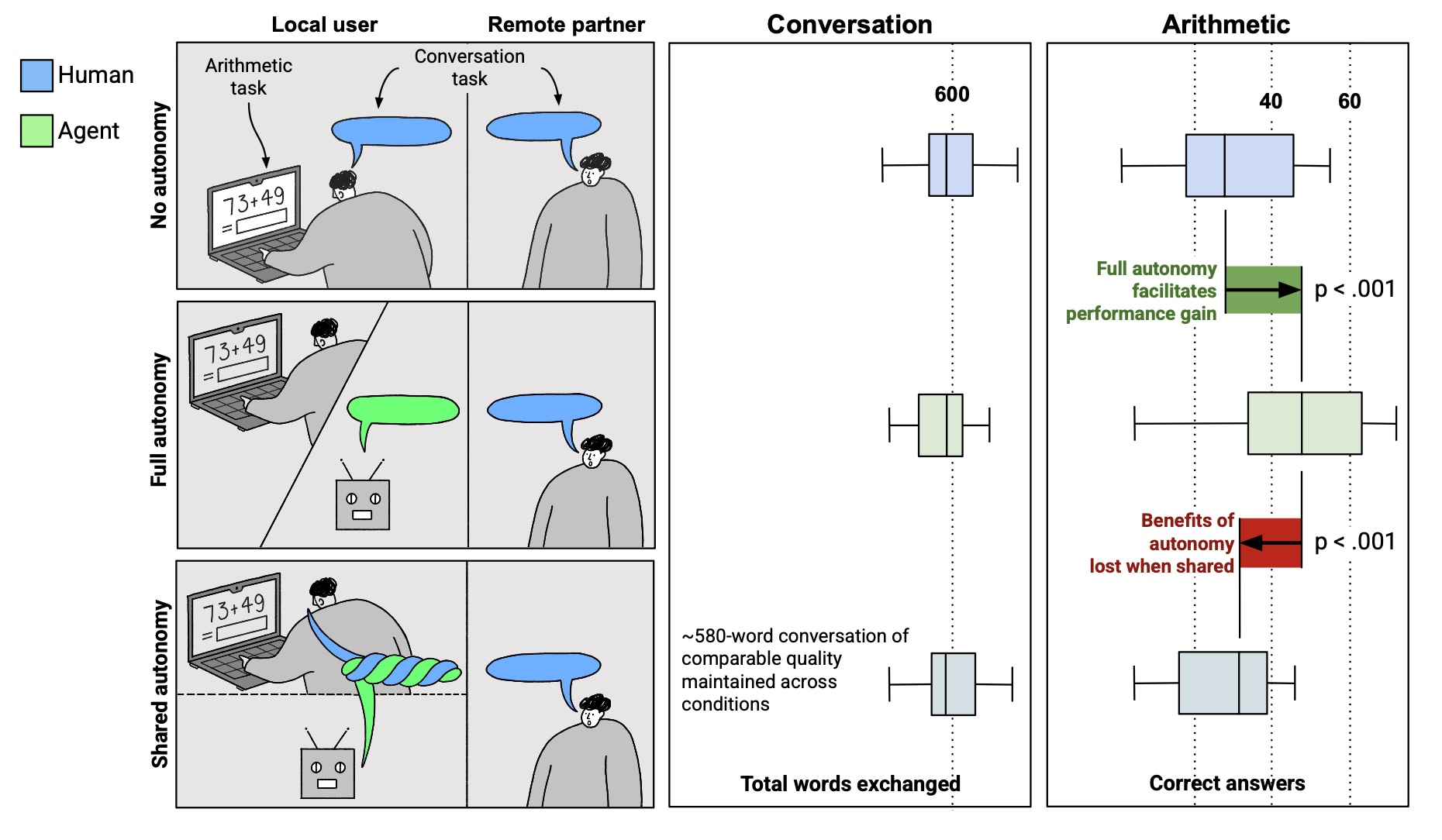
Advancements in computational agents will enable them to act as surrogates for users in online communication, promising enhanced productivity by supporting multitasking. This capability may be especially powerful when combined with human control, allowing users to retain agency while achieving better performance than either human or agent alone. However, it remains unclear how people might leverage this technology to multitask effectively. We present a study with 18 dyads exploring how users employ automated responses to support an arithmetic task while staying engaged in a voice call. Participants multitasked with a conversational agent under three levels of autonomy: none, shared, and full. Our findings indicate that fully automated systems can maintain conversational engagement, enabling users to multitask effectively. Surprisingly, shared autonomy hindered this ability. Based on our results, we discuss implications for designing shared autonomy in conversations, highlighting new considerations and challenges.
Letting an agent speak for you
Agents can now take part in real-time voice and video calls, so a user could let an agent attend a routine meeting while catching up on other work. Research on shared autonomy, from mixed-initiative interfaces to robot teleoperation, has found that combining human control with automation often works better than either alone. We asked whether this also holds for conversation: if users share a voice call with an agent, can they do something else at the same time?
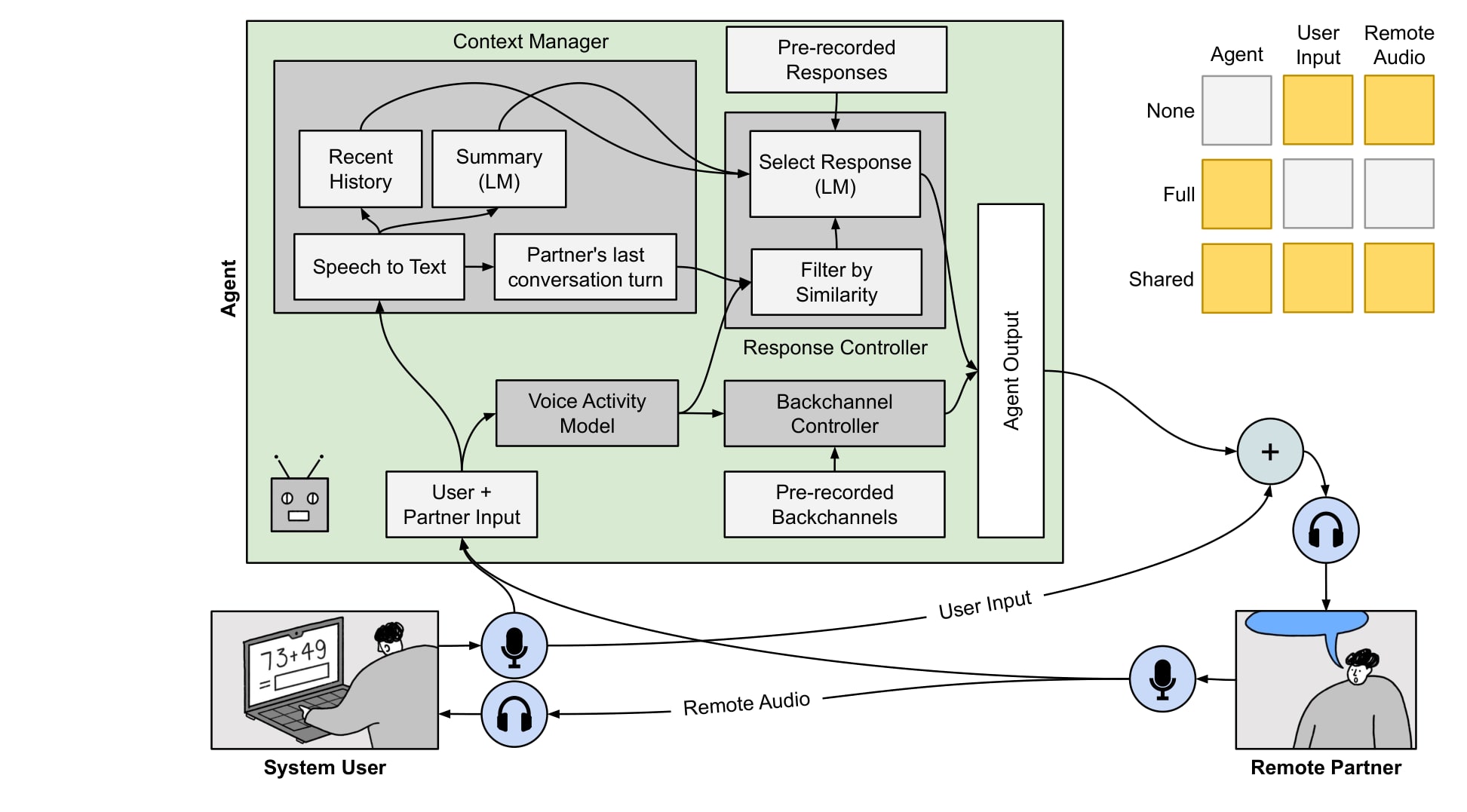
We built a voice call system in which the user can talk to the partner directly or let an agent respond. The agent speaks with segments of the user’s own speech, recorded in a similar earlier conversation: a language model picks the segment that best fits the partner’s last turn, and a voice activity model inserts backchannels such as “uh-huh” at natural moments. Whenever the user speaks, the user’s voice takes priority over the agent.
Experiment with 18 pairs
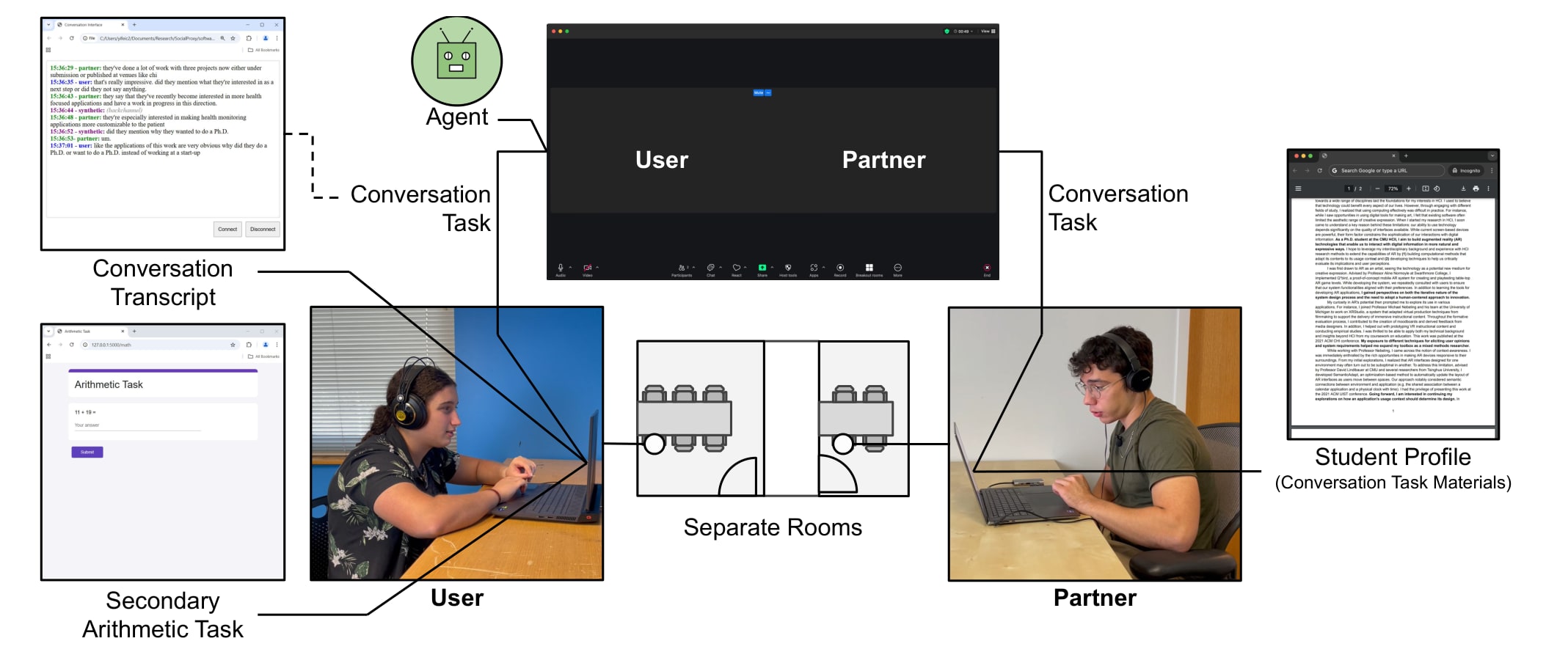
Eighteen pairs of participants (36 people) talked over a call from separate rooms about fictional student profiles. While talking, the user also solved arithmetic problems under three levels of autonomy: talking without the agent (none), leaving the conversation to the agent (full), and sharing it with the agent (shared).
Shared autonomy did not help multitasking
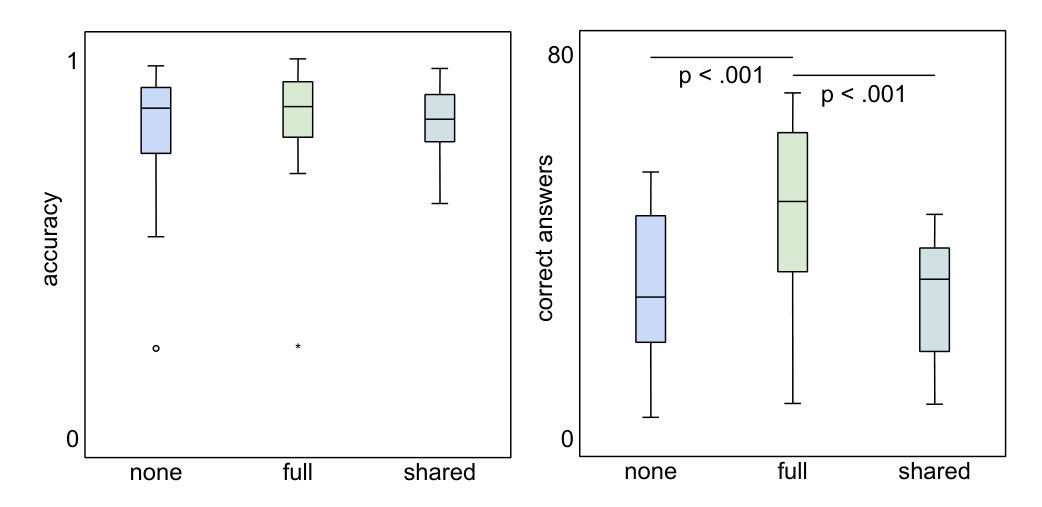
Sharing the conversation with the agent gave users no gain in multitasking: they solved about as many arithmetic problems as they did without the agent. Full autonomy worked as intended, and users answered the most problems correctly; without the agent they answered 33% fewer. With shared autonomy the agent spoke about 40% of the words on the user’s side, yet users still answered 36% fewer problems than with full autonomy. Accuracy was similar in all three conditions, so the difference came from how many problems users got through.
Full autonomy had a different problem: it freed users’ attention but left them uneasy. Users rated the fully automated conversations lower than the others, and some described feeling “in the dark”. Their partners noticed no difference, rating conversation quality equally high in all three conditions; only 3 of the 18 partners suspected automation during the conversations.
Shared autonomy eased this discomfort, and users rated those conversations about as highly as the ones they held themselves. The same visibility, however, drew their attention back to the call. Thirteen of the 18 users found that shared autonomy made taking part in the conversation more effortful, 11 felt compelled to follow the dialogue closely, and 9 kept monitoring the agent even when it responded appropriately. The attention the agent was meant to free went into supervising it.
Trust in agents may grow with use, but the paper argues that the problem may go deeper. When an agent acts as a user’s surrogate, its responses are perceived as extensions of the user’s own behavior, so they draw the user’s attention however well the agent performs; 13 users worried whether the agent represented them accurately. Designing shared autonomy for conversation therefore has to account for identity and self-representation, not only control.
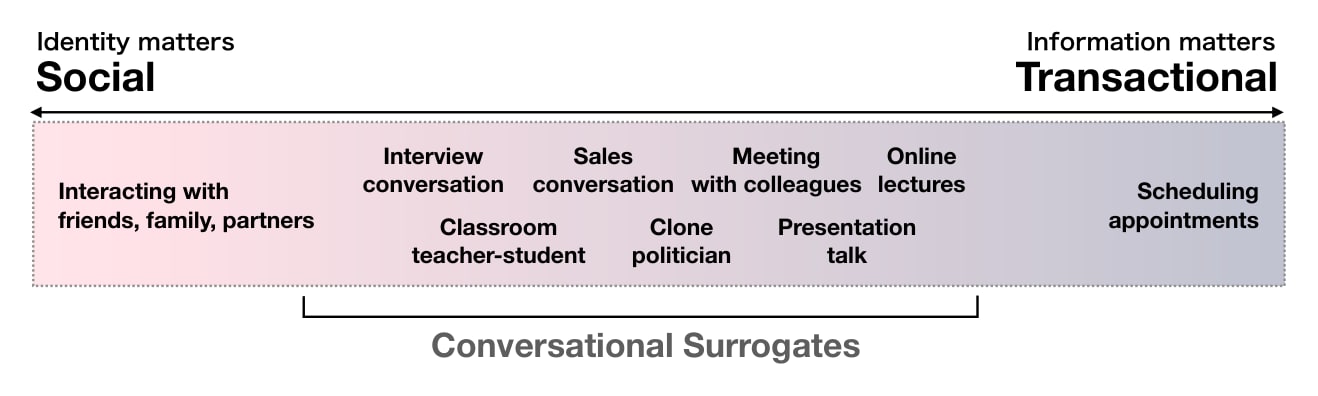
Where conversational surrogates fit
Conversations range from social ones, where who is speaking matters, to transactional ones, where only the information matters. We argue that conversational surrogates are most promising in between, in conversations such as meetings with colleagues or online lectures that serve both purposes.
Reference
Yi Fei Cheng, Hirokazu Shirado, and Shunichi Kasahara. 2025. Conversational Agents on Your Behalf: Opportunities and Challenges of Shared Autonomy in Voice Communication for Multitasking. In Proceedings of the 2025 CHI Conference on Human Factors in Computing Systems (CHI ’25). Association for Computing Machinery, New York, NY, USA, Article 160, 1–18. https://doi.org/10.1145/3706598.3714017
BibTeX
@inproceedings{10.1145/3706598.3714017,
  author    = {Cheng, Yi Fei and Shirado, Hirokazu and Kasahara, Shunichi},
  title     = {Conversational Agents on Your Behalf: Opportunities and Challenges of Shared Autonomy in Voice Communication for Multitasking},
  booktitle = {Proceedings of the 2025 CHI Conference on Human Factors in Computing Systems},
  series    = {CHI '25},
  year      = {2025},
  articleno = {160},
  numpages  = {18},
  publisher = {Association for Computing Machinery},
  address   = {New York, NY, USA},
  location  = {Yokohama, Japan},
  doi       = {10.1145/3706598.3714017}
}
Figures from the paper (Cheng et al., CHI ’25), licensed under CC BY 4.0.