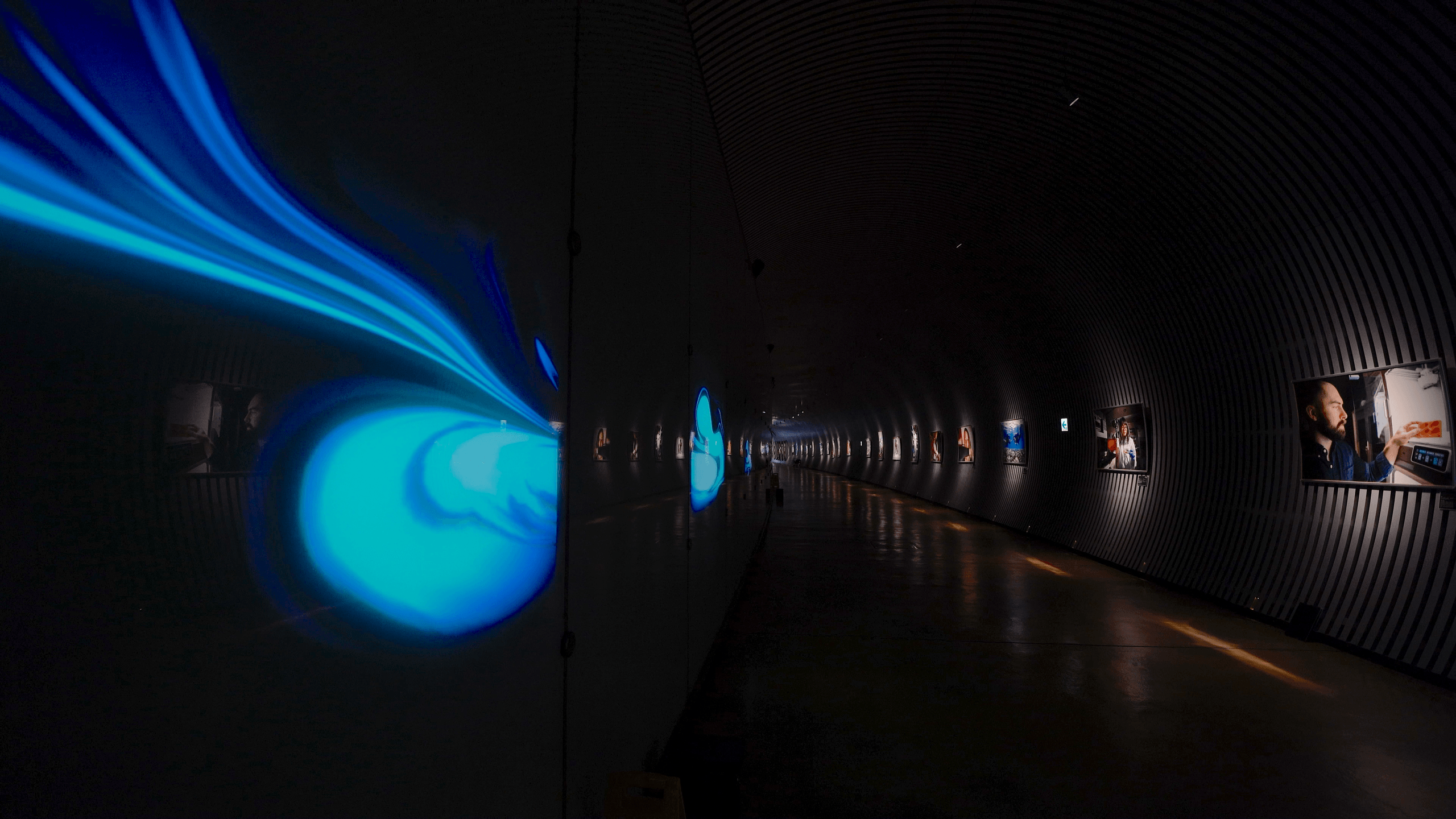
Oto・Iro (Sound・Color)
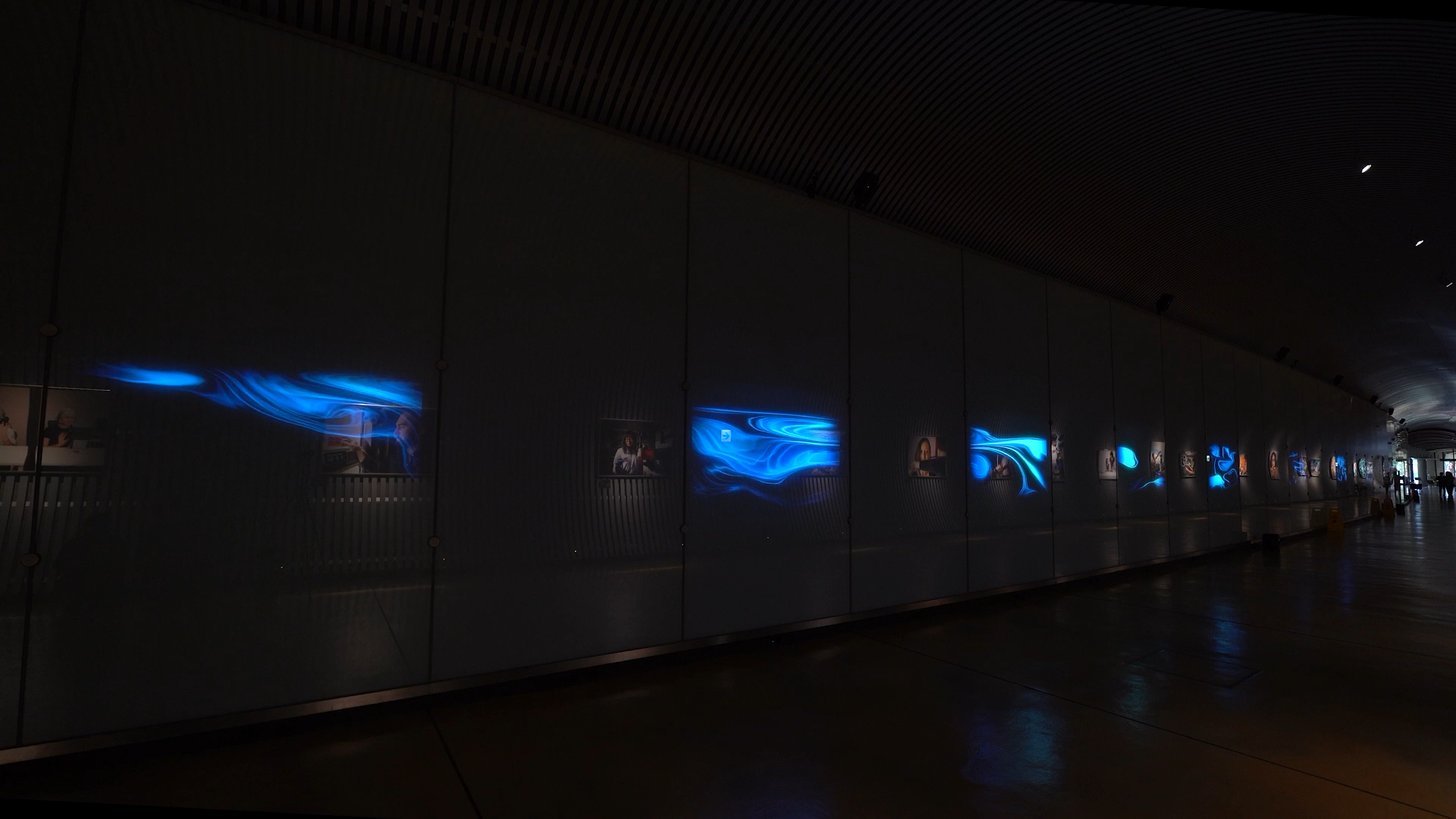
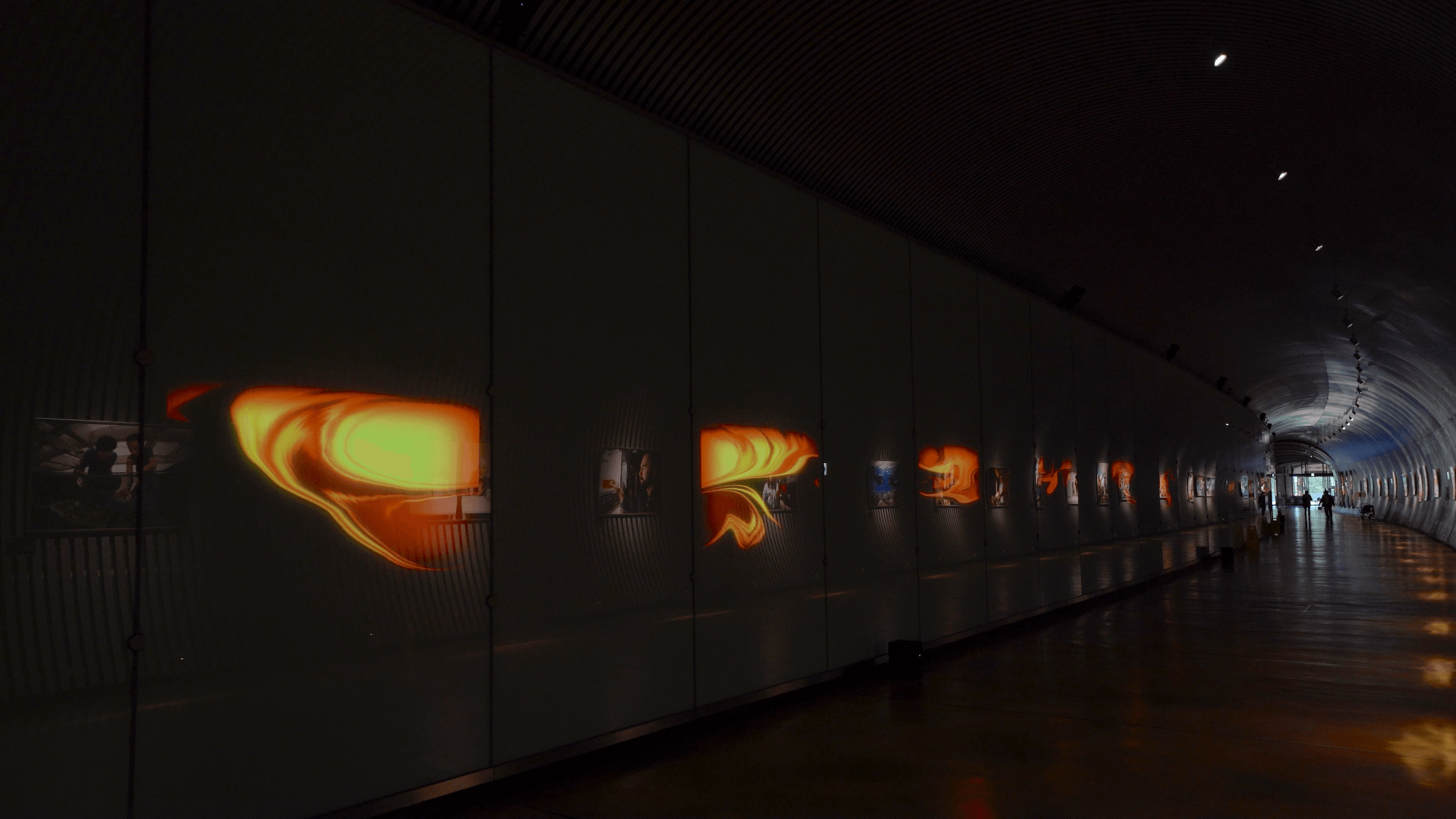
Oto・Iro transforms the OIST tunnel into an immersive audio-visual experience that blends art and science. It features original field recordings from all over Okinawa, together with synthetic sounds and projected colors. It is part installation, part experiment: it tests how natural and synthetic sounds, mixed with colors, can influence our emotions and state of mind.
Does colour change what a soundscape does?
Natural soundscapes are known to support well-being, while urban noise harms it. Most studies, however, examine sound on its own, although natural environments reach all the senses at once, and little is known about how colour, and colour temperature in particular, changes the effect of recorded soundscapes. We asked two questions: how do natural and synthetic soundscapes differ in their effect on people’s emotions, and how does warm or cool lighting interact with them?
A month of sound and colour in a tunnel
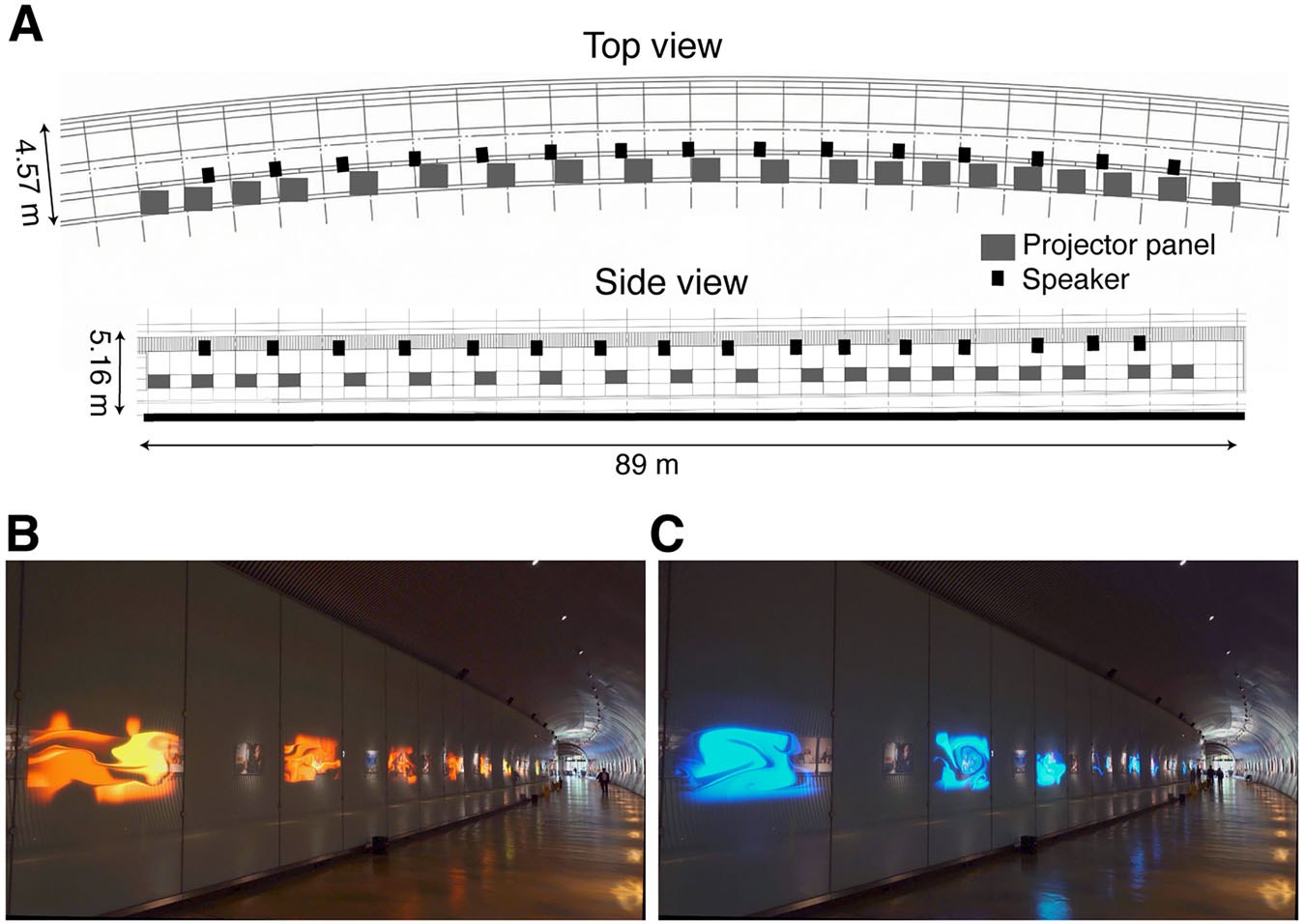
Oto・Iro ran as an experiment in the 100-metre tunnel that serves both as a gallery and as the entrance to OIST, so most participants were commuters passing through. Fifteen speakers and twenty projectors presented 20-minute blocks from 8:00 to 18:00 every day. Each block combined one sound condition with one colour. The natural sounds were local recordings: Ryukyu scops owl hoots over night insects, gentle waves over the sounds of coral, and frog calls over rainfall. The synthetic sounds mimicked these scenes but were built from filtered white noise and basic waveforms; there was also a no-sound condition. The images were abstract, in warm reds and yellows or in cool blues and greens. The 14 combinations were shuffled across days so that each appeared equally often at each time of day.
Passers-by reported how they felt by touching a point on Russell’s circumplex, a plane of pleasantness (valence) and activation, on touch screens at both ends of the tunnel. Over 25 days, they gave 3,365 responses.
The right sound with the right colour
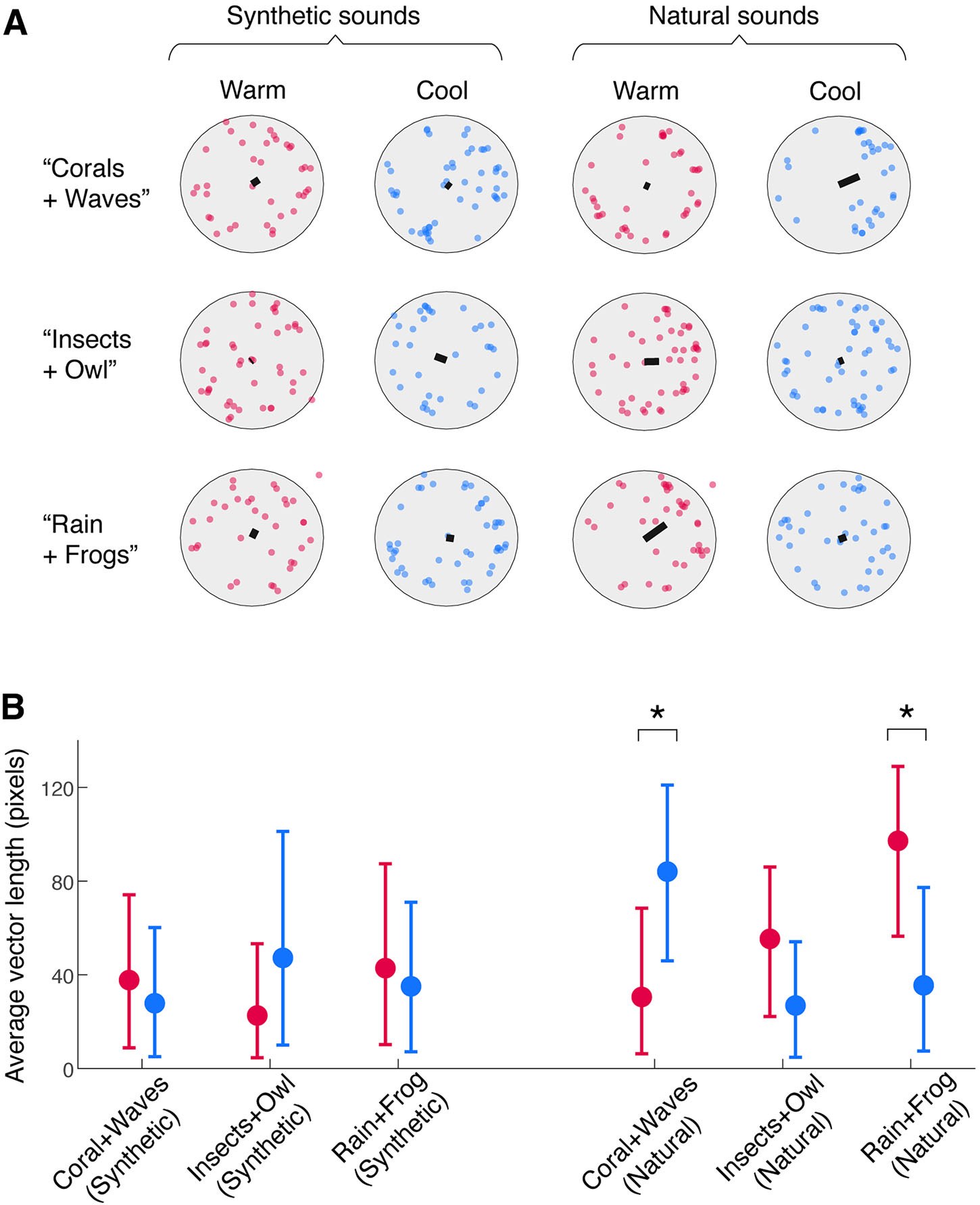
Whether natural sounds lifted people’s feelings depended on the colour they were paired with: ocean sounds raised pleasantness in blue light, and rain with frog calls in red light, while no synthetic sound had a positive effect in either colour. The paper calls these sound–colour combinations its most significant finding. For the ocean scene, the average response was markedly stronger in the cool environment than in the warm one, and for the rain scene markedly stronger in the warm environment (p = 0.018 and 0.02). The night scene of owl and insects showed no significant difference between the colours.
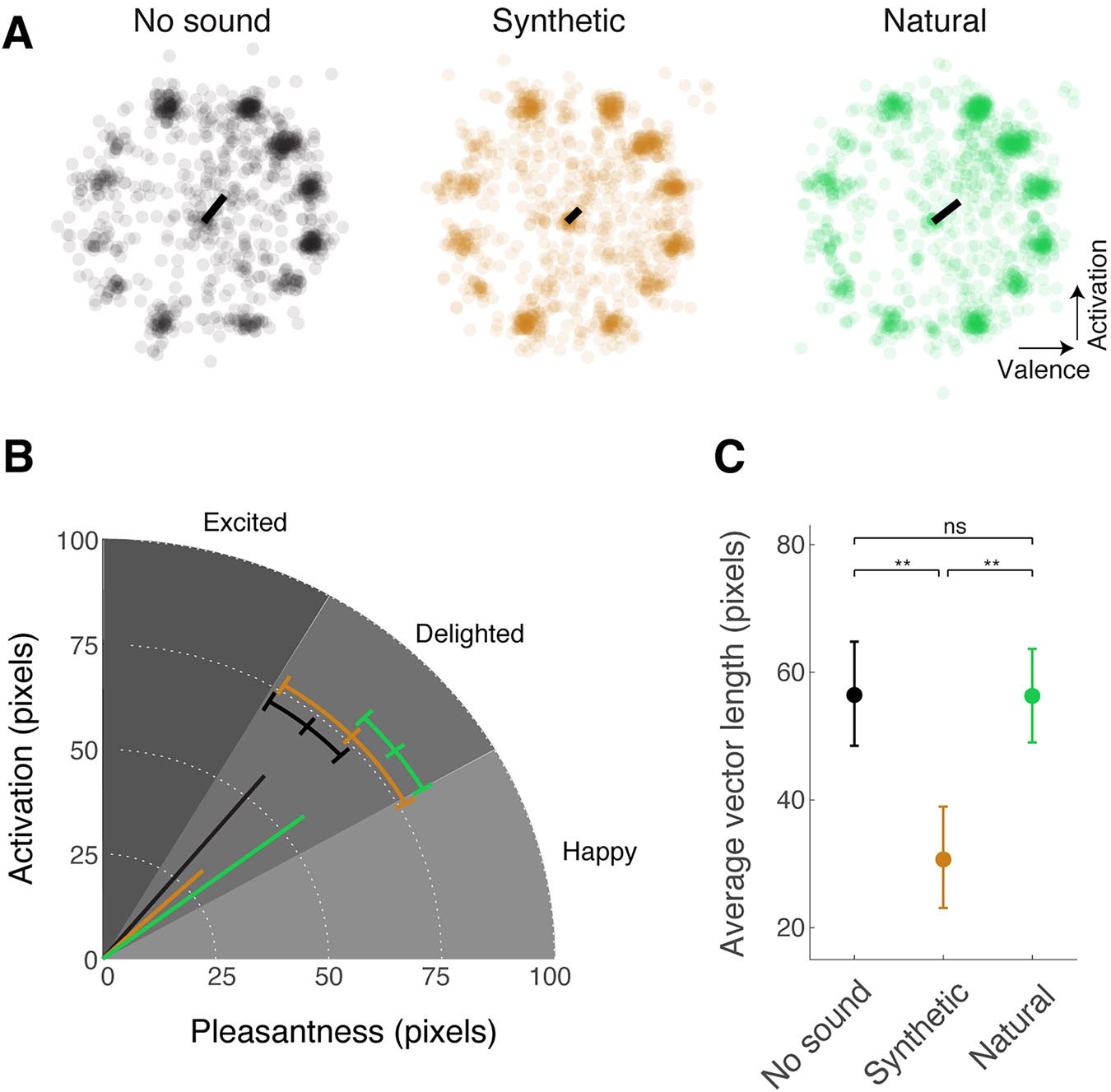
The type of sound mattered as well. Taken over both colours, responses leaned toward pleasant and active feelings in every condition, and their average direction did not differ. Responses to the synthetic sounds, however, were much less coherent: their average vector was about half as long as for natural sounds or silence (30.7 pixels, against 56.3 and 56.0). The paper reads this as a negative effect of the synthetic sounds on emotional well-being.
Why the pairing matters
The paper suggests that a congruent colour makes a scene easier to recognise, and that recognition is tied to memory and culture. Ocean sounds with blue are a direct match. Rain with red is less obvious: participants, most of them local to Okinawa, may link the warmth of sodium lighting with familiar night-time sounds such as frogs, and in Japanese culture red stands for both danger and protection, which may strengthen the restorative effect of rain through a sense of security. The synthetic sounds, designed to resemble the natural ones at the same sound level, may have fallen into an “uncanny valley”: near-matches can produce prediction errors in a brain that expects truly natural patterns, and sounds whose source cannot be identified are less comforting.
For design, adding natural sounds to sterile spaces such as tunnels and waiting rooms is not enough. The paper argues for meaningful sensory combinations rooted in local culture and people’s experiences, and notes that because artificial light always has a colour temperature, its role alongside sound deserves closer study. The study took place in one public space with mostly local participants, compared only warm and cool colours, and relied on self-reports; whether the pairings hold in other places and cultures remains open.
Paper: The impact of visual-auditory interactions on well-being: colour and soundscapes in urban spaces (npj Acoustics, 2026)
Exhibition
OIST Tunnel Gallery, Okinawa, February 3 – March 6, 2025
Project by OIST Sonic Lab
Supported by COI-NEXT, The Global Bioconvergence Center of Innovation
Reference
Izumi Fukunaga, Shunichi Kasahara, Nicholas Luscombe, Santa Naruse, and Paul Bavister. 2026. The impact of visual-auditory interactions on well-being: colour and soundscapes in urban spaces. npj Acoustics 2, 1, Article 12 (April 2026). https://doi.org/10.1038/s44384-026-00048-7
BibTeX
@article{10.1038/s44384-026-00048-7,
  author    = {Fukunaga, Izumi and Kasahara, Shunichi and Luscombe, Nicholas and Naruse, Santa and Bavister, Paul},
  title     = {The impact of visual-auditory interactions on well-being: colour and soundscapes in urban spaces},
  journal   = {npj Acoustics},
  volume    = {2},
  number    = {1},
  year      = {2026},
  articleno = {12},
  publisher = {Springer Science and Business Media LLC},
  doi       = {10.1038/s44384-026-00048-7}
}
Figures from the paper (Fukunaga et al., npj Acoustics 2026), licensed under CC BY 4.0.
- News: Oto-Iro Installation
- News: Paper published in npj Acoustics